Give a child who knows MapleStory Classic World a small paper quest: choose an adventurer, color a familiar creature, and add a detail to a home or workshop. These MapleStory coloring activities use the game's early-world characters and everyday features as prompts for drawing, conversation, and a finished folder to keep. Start with the MapleStory Classic World coloring pages and print a few scenes before setting out supplies.
The AI-generated color illustrations show the activity setup; the collection supplies black-and-white sheets. This original fan activity is not an in-game quest.
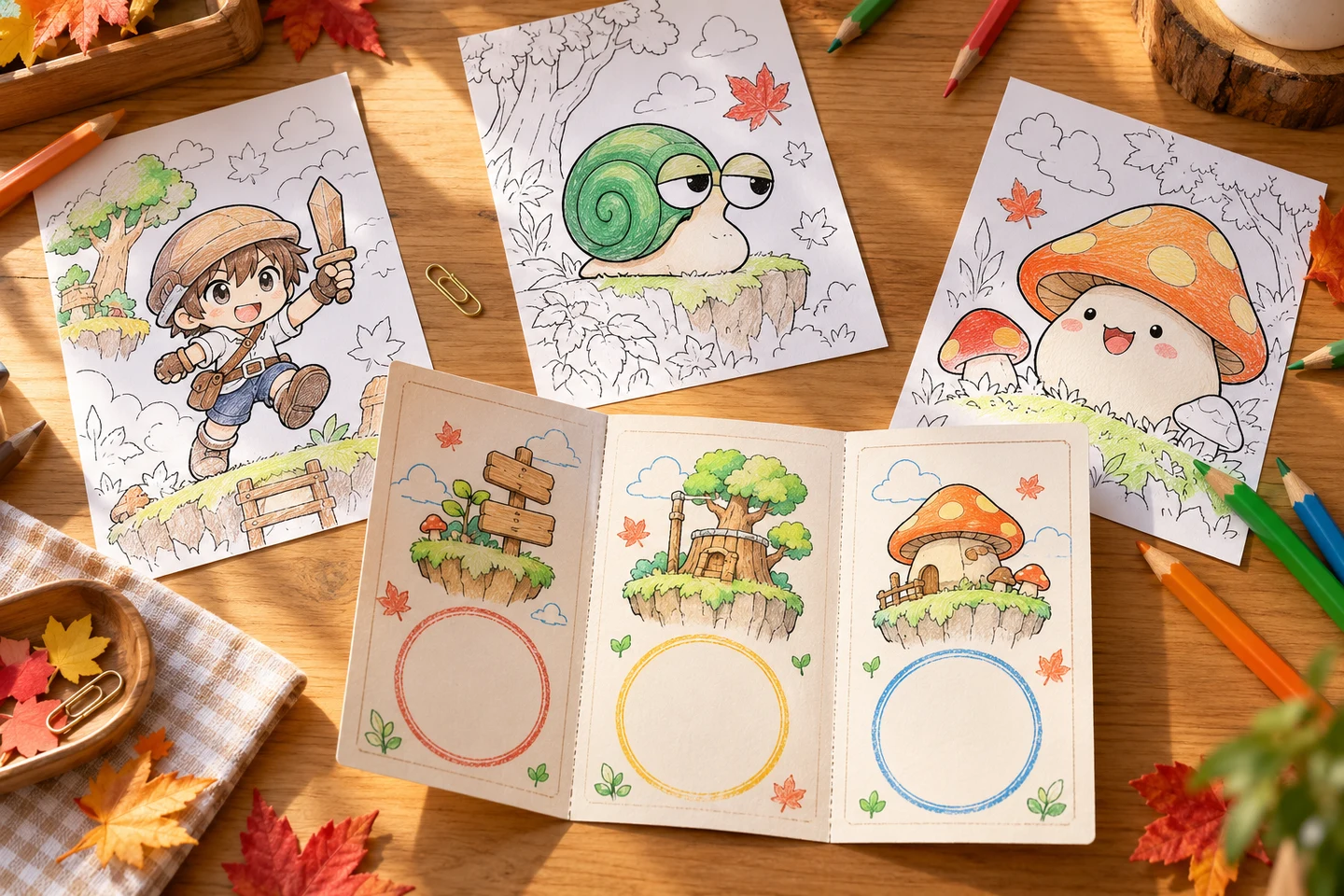
A simple passport turns three separate pages into a beginning, a creature encounter, and a place to return home.
Plan a three-stop quest passport
Fold a sheet of printer paper into a small booklet. On its cover, write “My Classic World Day” and leave a space for a name. Inside, draw three empty circles labeled character, creature, and home. The circles are check marks. Children can color in any order and fill a circle when they decide a page is finished.
For the first stop, use a MapleStory activity sheet showing character creation. Ask the child to choose two colors for clothing and one accessory that helps their adventurer explore. They might keep the original outfit or invent a variant on the sheet's open areas. MapleStory coloring activities work well here because a familiar character outline still leaves room for personal choices. Avoid asking the image or the child to reproduce tiny interface text; the activity is about the adventurer.
For the second stop, put two MapleStory coloring pages—the Snail and Orange Mushroom—beside one another. One person colors the Snail's shell while another gives the Orange Mushroom a patterned cap. Swap the pages halfway through only if both want to collaborate. Let each child name the place where their creature lives on the back of the paper. These MapleStory coloring pages are recognizable without turning a quiet coloring session into a battle scene.
For the last stop, choose a MapleStory activity sheet with a home or crafting scene. Add a rug, a chair, or tools to the pictured space with a pencil before coloring. The official Classic World site describes housing and crafting, so a decorated room and a workbench are grounded in the game; the exact arrangement is the child's invention. Finish the passport by slipping the three pages into a folder or clipping them together.
Set up character, creature, and town stations
For a group, set out a character station, a creature station, and a town station. At the town station, display the citizenship, fashion, Manji outfit, and Founder gear pages. A folded card can say “Choose one detail to make your own.” That is enough direction for guests who already know the world.
Keep the stations flexible for mixed ages. A younger child can fill broad shapes on the Orange Mushroom page. Someone who wants more detail can work on gear, furniture, or the rings in the equipment display. Put colored pencils near the intricate pages and crayons near the simpler ones. If an outline is too tight, choose a different MapleStory activity sheet.
Older children can try an equipment-designer round. Place the Founder hat display at the center of the table and give everyone a small blank card. Each child sketches a harmless, useful accessory for their own adventurer—perhaps a rain hat or a lantern holder—then colors the existing page. The new accessory belongs on the card, so nobody has to squeeze it into a crowded composition. You can use the completed cards as bookmarks.
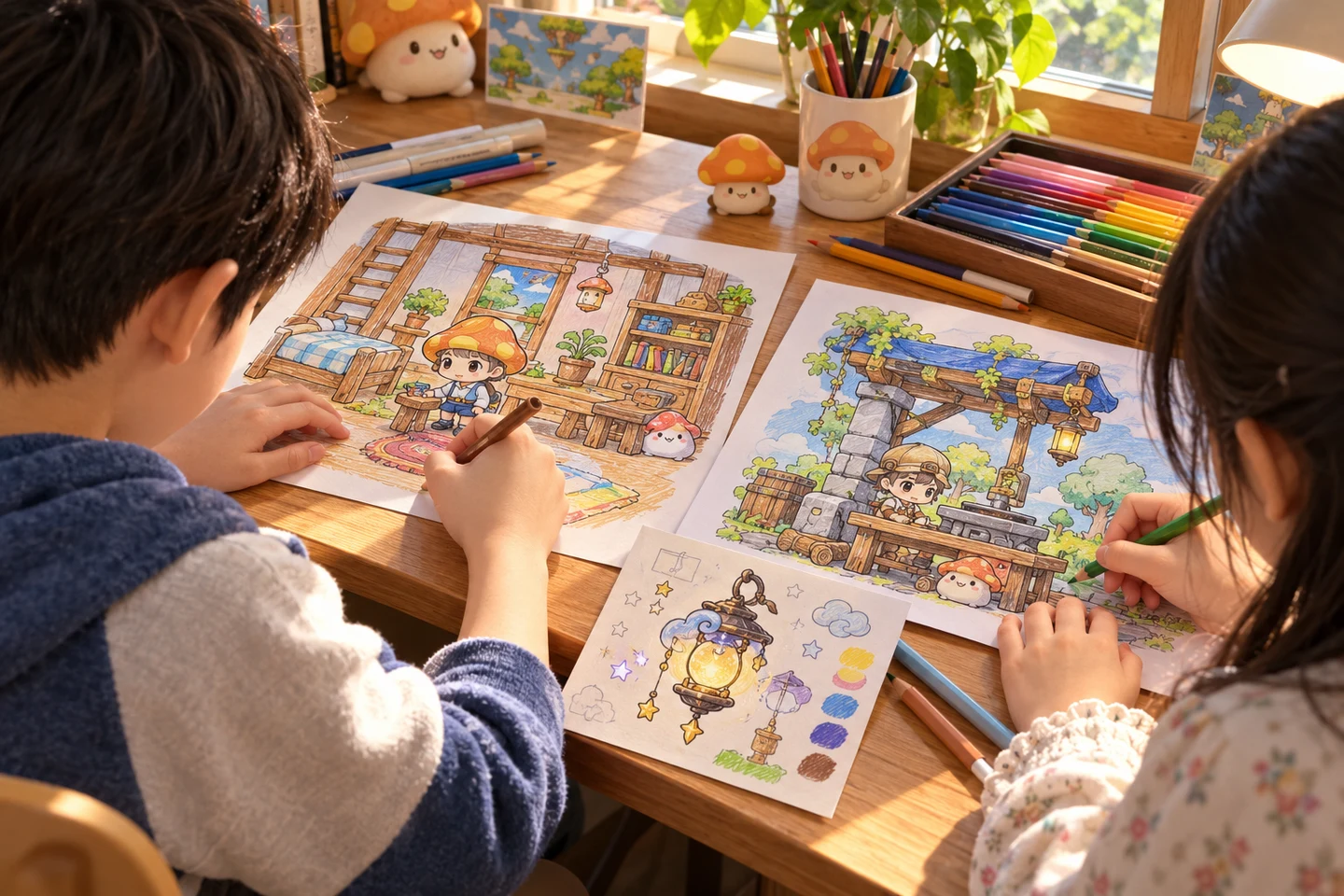
The home and crafting pages invite additions, while separate cards give elaborate ideas their own space.
Test the print before assembling the passport
Preview a MapleStory coloring page at A4 or US Letter size and print one test sheet. Look at the eyes, fingers, small equipment loops, and edges of the Snail shell. If a tiny area becomes muddy on paper, use the simpler creature or home scene for a younger group. For a booklet, print one MapleStory activity sheet per page; shrinking several makes details harder to color.
Lay completed pages in quest order on a table. Ask each child to choose a favorite detail and describe it in one sentence: “My adventurer keeps this chair for visitors,” for example. Write that sentence on the passport cover if they want help. Take-home folders are more practical than a wall display when pages belong to different families. Nobody needs to finish all three stops for the day to feel complete.
MapleStory coloring activities can also be a calm follow-up to a gaming session. Choose a single scene that connects to what the player remembers, set a ten-minute timer only if the group likes one, and stop while the work is enjoyable. The goal is a printable activity with a story attached, not a test of game knowledge.
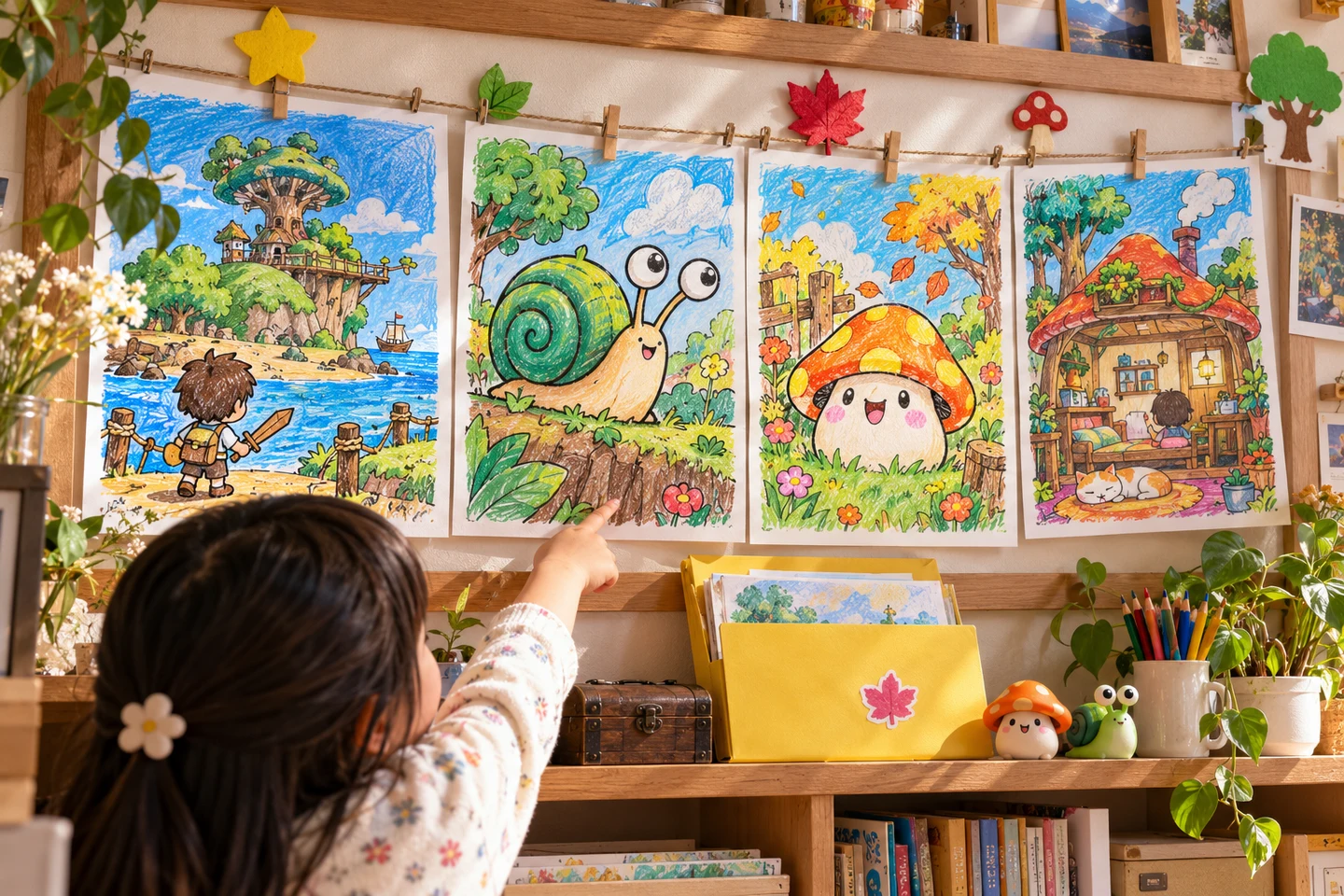
A sequence of finished pages lets each participant explain one small decision without ranking the drawings.
Questions before you begin
Do I need every sheet in the collection?
No. Three pages make a complete passport. The remaining sheets can wait for another day; select sheets by subject and line complexity.
Can I add a character idea of my own?
Yes. If you want a different MapleStory activity sheet, describe the subject in the AI coloring page tool. AI creation requires sign-in and credits; check the displayed cost before generating and inspect the resulting line art before printing. A clear prompt such as “an adventurer arranging furniture in a small MapleStory-inspired home, open shapes, no lettering” is easier to review than a long list of tiny objects.
Where can I see other approaches?
Browse the community for page ideas. For another story-led session, try Genshin Impact coloring activities; for a character-and-creature activity, see Pokemon coloring activities. Each guide is a different paper activity, so choose the structure that fits your table.