Camera Tower Defense coloring activities can turn a printed scene into a small planning game. The Camera Tower Defense coloring page collection gives you camera defenders, toilet enemies, and chapter routes to work with. Pick a route picture first, then choose units to place beside it. This original fan activity uses the specific Roblox experience by Initiator Studios as its reference; it does not pretend to reproduce a live chapter or code system.
The color illustrations below are AI-generated activity scenes. Printable black-and-white sheets are in the linked collection. This independent fan activity is not official game instruction.
You will need one route sheet, a few small defender pictures, scissors, pencils, and removable tape. An adult should handle cutting for younger children. Leave the page flat while you decide where each unit goes. Coloring comes after the plan, so the pictures have a purpose beyond filling space.
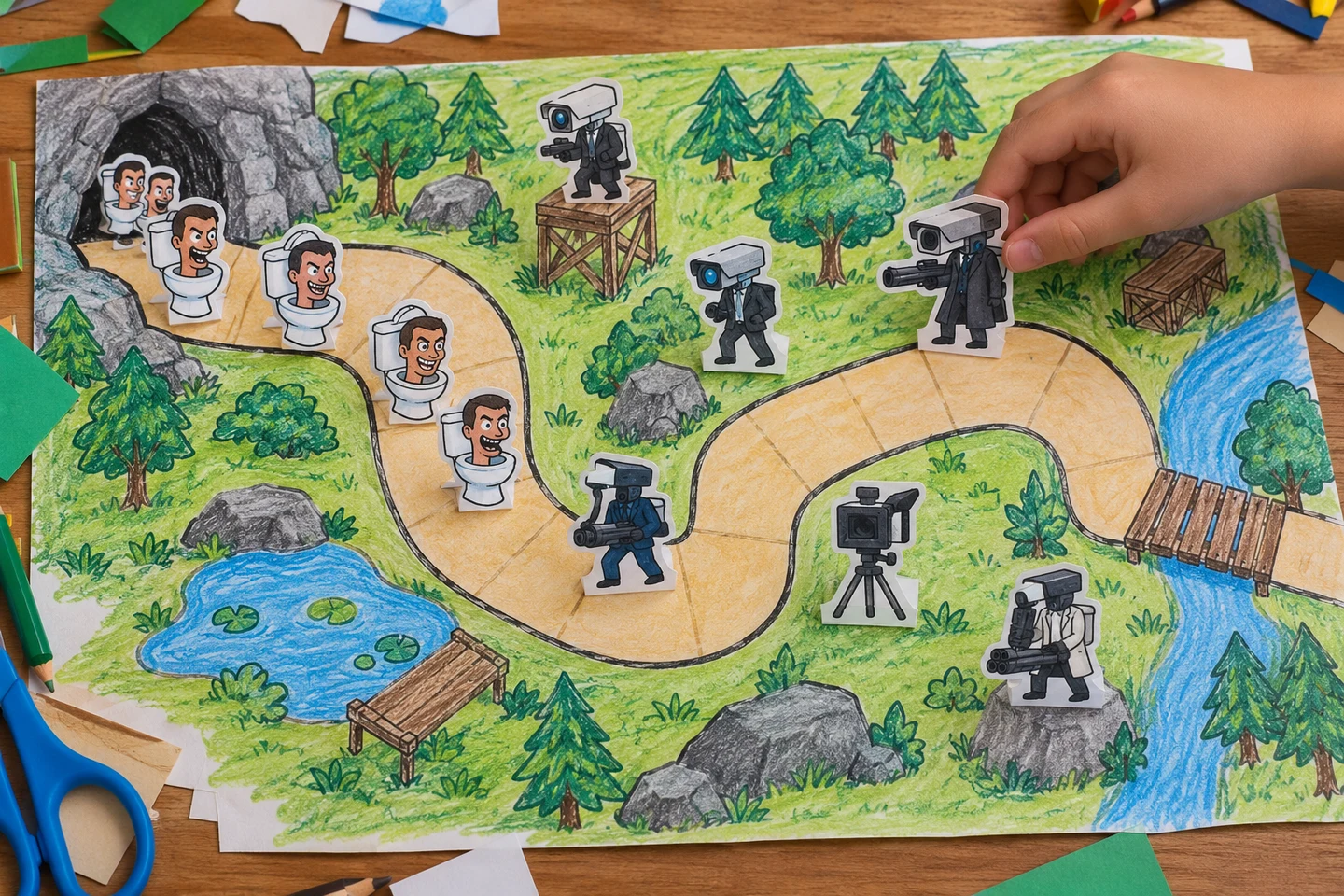
A removable paper unit lets you change a defense plan without reprinting the route.
Mark the route before placing a unit
Trace the path that toilet enemies would follow with a finger. Identify its entrance, bends, and exit. On scrap paper, draw three simple marks: a circle for a bend, a square for an open space, and an arrow for the exit. Place these beside the printed lane; do not draw over a line you still want to color.
Ask one useful question at each bend: if a camera defender stood here, what part of the path could it see? The answer may be a long straight stretch, a short turn, or almost nothing because a wall blocks the view. The paper game becomes more engaging when a child can explain each placement. There is no need to invent range numbers or a named tower ability.
Start with two unit cutouts and one route. If the group wants a harder puzzle, add a third unit but give it a different outline or height.
Make a before-and-after upgrade card
The experience description says upgrades improve tower statistics and change their appearance. Put that visible change to work without claiming a particular upgrade tree. Fold a small card in half. On the left, color a camera unit with a simple body. On the right, draw the same unit with one additional attachment or stronger outline. The choice is an art exercise, not a screenshot of an official unit.
Let a child choose when to flip the card. Perhaps the toilet wave reaches the second bend, or the team decides a unit needs a better position. Discuss what changed visually: wider camera housing, taller stand, or a different accent color. Avoid covering the camera head, since its silhouette identifies the game theme at a glance.
The shop and credits in the game description can inspire a paper “budget” of three plain tokens. Give one token for each completed section of coloring, then spend a token to move or flip a defender card. These are house rules for the table, not the game's actual prices. They give a restless player a small decision while others finish a picture.
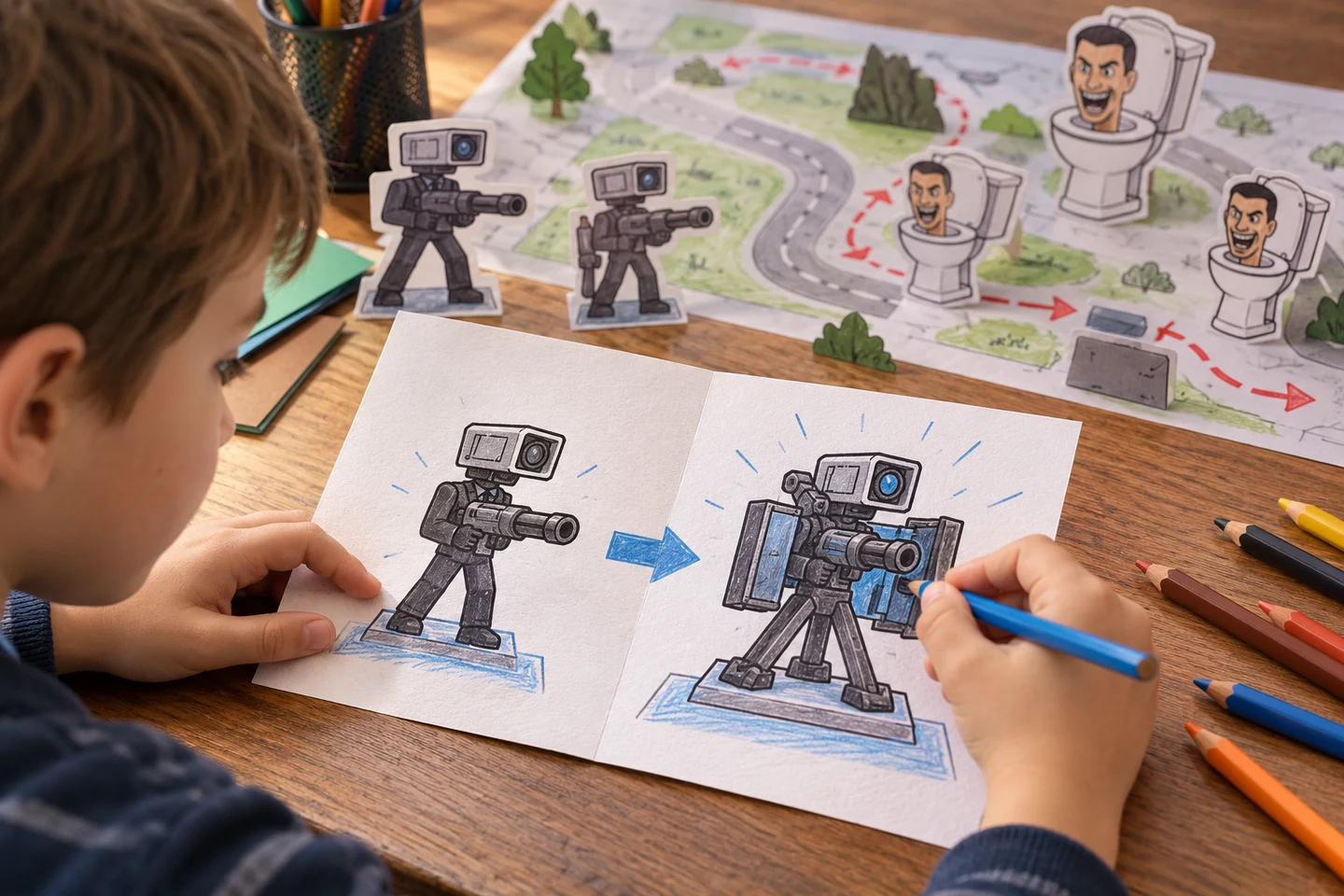
A foldover card shows an upgrade through shape and color, with no invented unit name.
Run a three-wave paper defense game
Use three small toilet-enemy cutouts. Place the first at the path entrance. A player moves it to the next bend, then stops to ask which camera unit has a clear view. If the group can point to a unit, move the cutout to a finished pile; if not, try moving a defender before the next wave. Repeat with two enemies entering from the same entrance. Keep it playful and non-graphic.
Choose pictures with distinct shapes for the paper game. A route sheet should have an easy-to-follow path; an enemy cutout should show a toilet silhouette; a defender cutout should keep its camera head visible. If a printed thumbnail is too small to cut neatly, color it as a full sheet and draw the moveable piece on blank paper instead.
For a solo activity, skip the waves and set yourself a visual task: color all camera units one way, all enemies another, and leave the route light enough to follow. Then draw one alternate defense plan on a transparent sleeve or a second sheet. Camera Tower Defense coloring activities can be a quiet pattern exercise as well as a game.
Compare plans without calling one “correct”
At the end of the paper defense game, sketch the first arrangement. Move the paper units, try again, and ask what changed. Did a unit cover more of the entrance? Was the exit left unguarded? Could the same unit be useful at a different bend? Children can answer by pointing, without writing a paragraph.
Display two plans side by side. Label them with shapes or colors instead of scores.
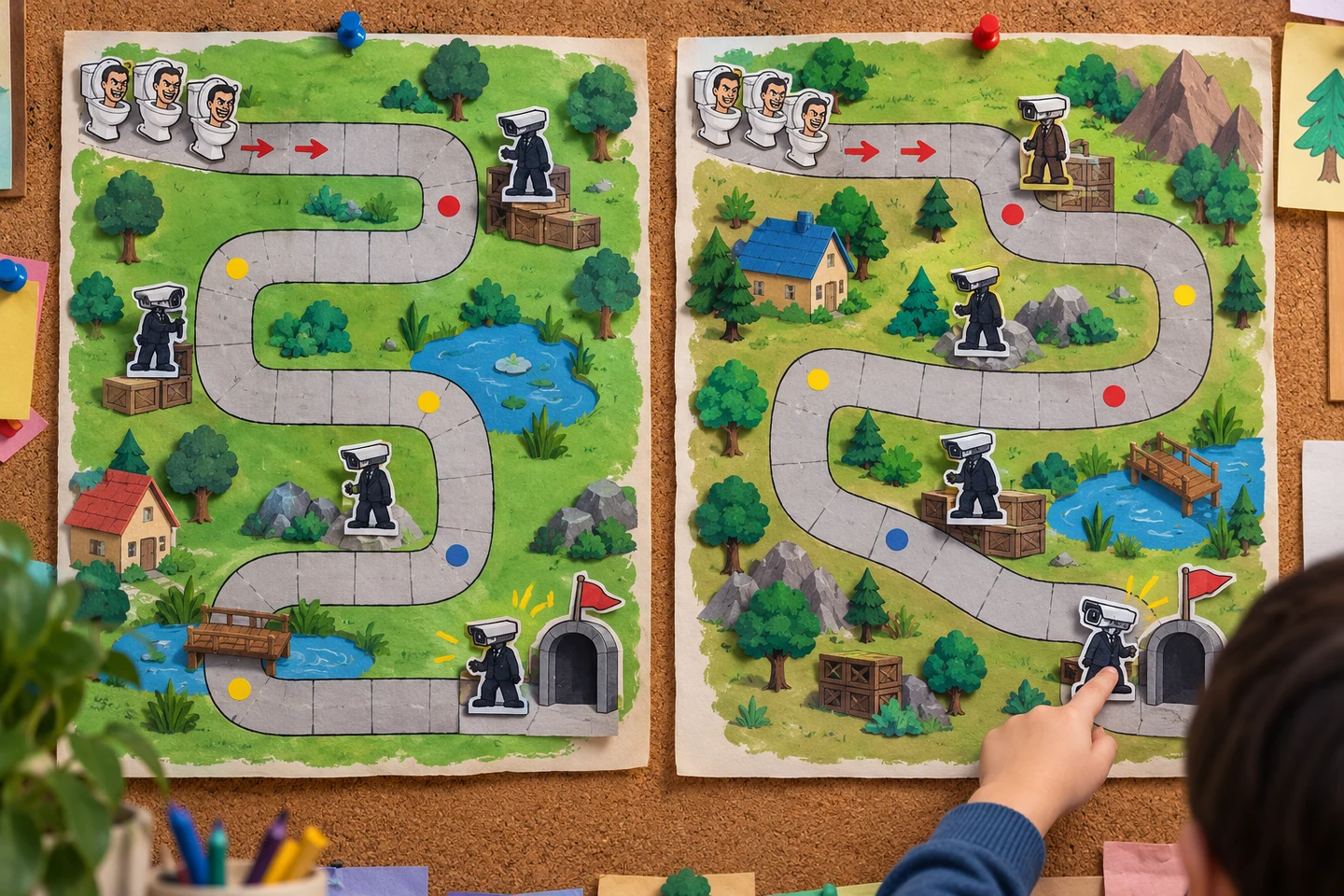
Move the pieces and compare coverage; the same colored route supports another round.
Print for cutting and reuse
Test the route sheet at A4 or Letter size. Make sure the turns remain visible after printing and the camera shapes do not collapse into black blocks. Use ordinary paper for the main scene and a slightly sturdier sheet for cutouts if your printer supports it. Keep the cut pieces in an envelope marked with a small drawing, not a long list of unit names.
The original Roblox page currently shows no running experiences, so this paper defense game stands on its own. For new compositions, the AI coloring page tool accepts a written idea; creation requires sign-in and credits, and the displayed cost should be checked before generating. Review the output before printing. You can also browse the community gallery. For another route-based activity, see Minecraft Dungeons coloring activities; for a very different collectible paper project, try Ride a Dino coloring activities.
Keep these Camera Tower Defense coloring activities simple enough that a child can explain where the defenders are placed. A clear path and a few movable pieces offer more play than a crowded sheet full of labels.