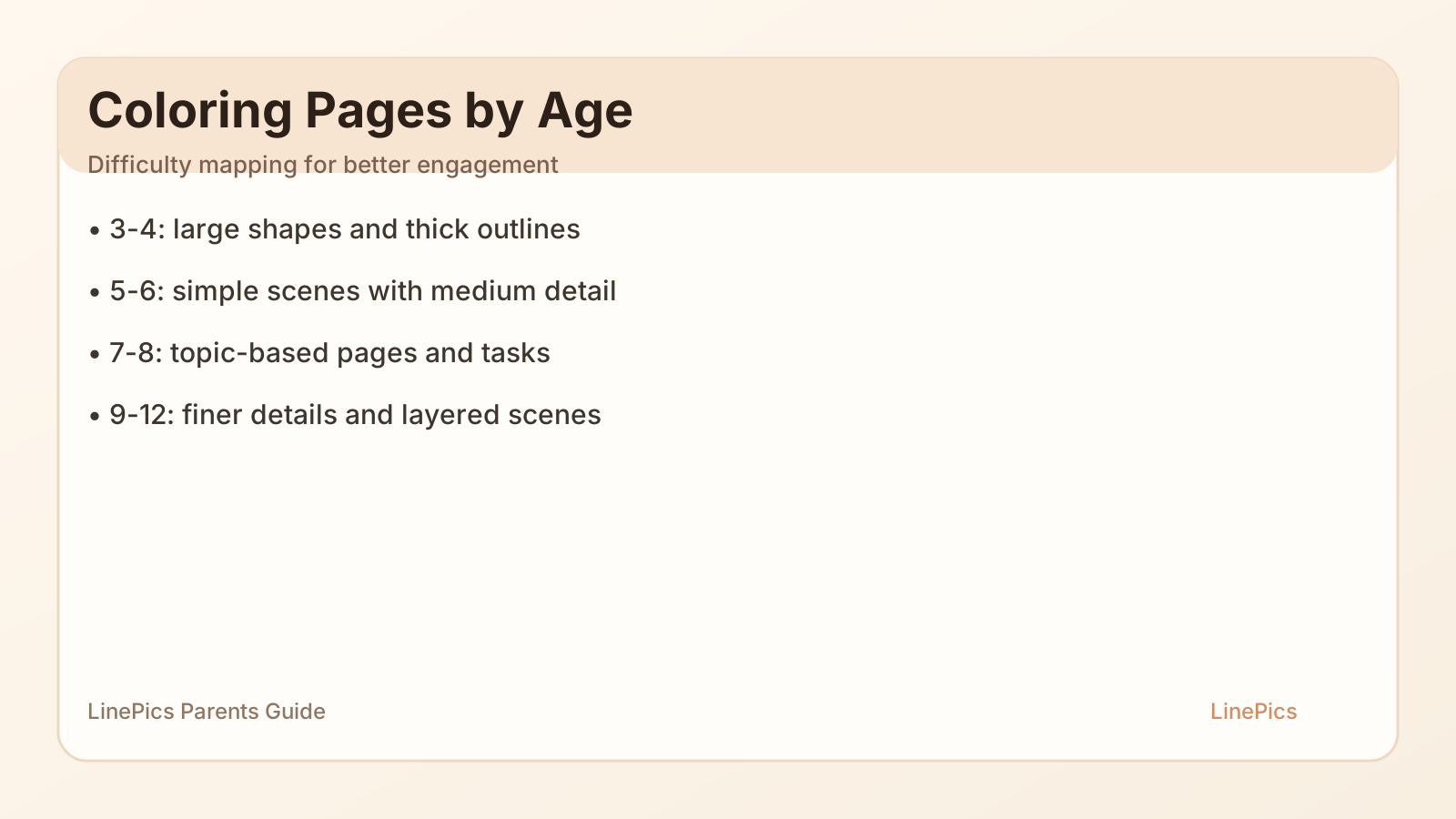
Figure: Age-based selection matrix for coloring pages for kids.
Publishing random images is easy. Building a useful coloring pages for kids library requires age matching.
Children at different stages need different line density, shape complexity, and session length. This guide helps you choose correctly and avoid frustration.
Why Age Matching Matters
If a page is too hard:
- kids give up quickly,
- adults end up finishing the page,
- confidence drops.
If a page is too easy:
- attention fades,
- learning value is limited.
Great printable coloring pages feel achievable with a small challenge.
Ages 3 to 4: Early Control
Recommended page style:
- large shapes,
- thick outlines,
- limited small details,
- familiar objects (animals, fruits, simple vehicles).
Session target:
- 8 to 12 minutes.
Avoid:
- dense backgrounds,
- tiny repeated patterns,
- narrow spaces.
Good keyword fit for this segment: easy coloring pages for toddlers.
Ages 5 to 6: Better Hand Control and Story Interest
Recommended page style:
- medium-size objects,
- simple scenes with 2 to 4 elements,
- character actions (running, jumping, playing).
Session target:
- 12 to 18 minutes.
Add learning prompts:
- "Color all circles blue",
- "Find three objects that start with B".
This is where preschool printable coloring pages perform well.
Ages 7 to 8: Theme-Based Engagement
Recommended page style:
- moderate detail,
- themed packs (animals, space, sports, nature),
- simple perspective.
Session target:
- 15 to 25 minutes.
Add extension tasks:
- write one sentence about the picture,
- rank favorite colors used,
- compare two pages by difficulty.
Useful SEO cluster: coloring pages for 7 year olds, printable coloring pages for school.
Ages 9 to 12: Precision and Personal Style
Recommended page style:
- finer line work,
- layered scenes,
- more realistic proportion,
- optional pattern sections.
Session target:
- 20 to 35 minutes.
Add creative freedom:
- custom palettes,
- background redesign,
- mixed media (colored pencils plus markers).
This segment responds well to topic-specific pages such as animal coloring pages and fantasy coloring pages.
Quick Selection Matrix
| Age | Line Thickness | Detail Level | Best Topics |
|---|---|---|---|
| 3-4 | Thick | Very low | basic animals, shapes |
| 5-6 | Medium-thick | Low | daily life, simple characters |
| 7-8 | Medium | Medium | sports, nature, vehicles |
| 9-12 | Medium-fine | Medium-high | fantasy, architecture, advanced animals |
Classroom Grouping Strategy
Mixed-age class?
- Prepare three difficulty buckets: easy, standard, challenge.
- Let students pick based on confidence, not age label.
- Keep one backup set for fast finishers.
For teachers, this reduces behavior friction and supports differentiated instruction.
How to Build Better Collection Pages
If you run a site:
- Tag each page with age range.
- Display difficulty labels in gallery cards.
- Offer filtered views such as
Easy,Ages 5-6,Ages 7-8. - Link every collection to one practical parent guide.
This structure improves user trust and helps search engines understand your topical depth.
Final Checklist Before Assigning a Page
- Child can identify main shapes quickly.
- Page complexity matches expected attention span.
- Printing quality is clean and readable.
- You have a backup option one level easier.
When age and complexity align, coloring becomes both enjoyable and educational.
References
- CDC developmental milestones overview: https://www.cdc.gov/ncbddd/actearly/milestones/index.html
- Google guidance for helpful, reliable content: https://developers.google.com/search/docs/fundamentals/creating-helpful-content