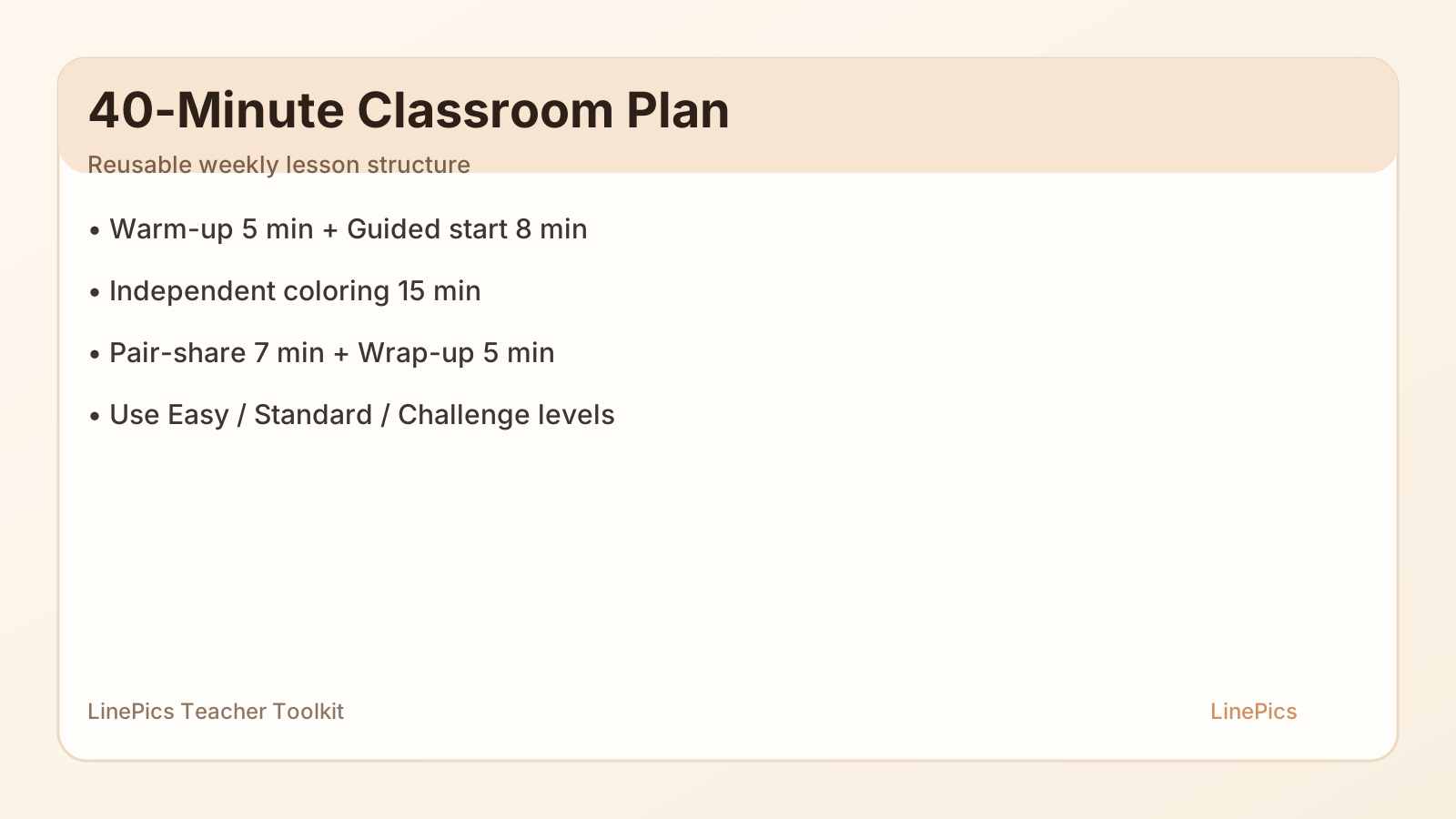
Figure: Reusable 40-minute classroom plan with printable coloring pages.
Many teachers use coloring pages for kids as filler time. That wastes potential.
With a clear structure, printable worksheets become a practical tool for attention, vocabulary, and discussion. This plan is designed for a standard 40-minute class and works for elementary levels.
Lesson Objective
By the end of class, students should:
- complete one printable coloring page,
- use target vocabulary in context,
- explain one choice they made (color, object, or scene).
Time Plan (40 Minutes)
- Warm-up (5 min)
- Guided start (8 min)
- Independent coloring (15 min)
- Pair share (7 min)
- Wrap-up and cleanup (5 min)
Step 1: Warm-Up (5 Minutes)
Show one sample page and ask:
- What do you see first?
- Which three colors would you choose?
- Which part looks easy or difficult?
This primes vocabulary and lowers start-up hesitation.
Step 2: Guided Start (8 Minutes)
Model quickly:
- how to hold materials,
- how to fill larger areas first,
- how to keep edges clean.
Give one clear constraint to focus attention:
- "Use only warm colors in the foreground" or
- "Color animals first, background second".
Step 3: Independent Work (15 Minutes)
Teacher moves with a simple checklist:
- Is the student engaged?
- Is the page difficulty appropriate?
- Does the student need a simpler or harder alternative?
Prepare a backup stack of easy coloring pages for students who struggle with detail.
Step 4: Pair Share (7 Minutes)
Use a sentence frame:
- "I chose ___ because ___."
- "The hardest part was ___."
- "Next time I want to try ___."
This turns coloring into communication practice, not just silent activity.
Step 5: Wrap-Up (5 Minutes)
Quick close:
- 2 volunteer shares,
- one class reflection question,
- collect pages by topic folder.
Archive pages for parent conferences and portfolio evidence.
Topic Packs That Work Well
For classroom pacing, rotate themes weekly:
- Week 1: animals
- Week 2: transportation
- Week 3: community helpers
- Week 4: seasons and weather
Theme rotation supports vocabulary recycling without boring repetition.
Differentiation Without Chaos
Use three labels printed on top corner:
- E (easy)
- S (standard)
- C (challenge)
Students can self-select with guidance. You avoid public ability grouping while still matching task difficulty.
Assessment Rubric (Fast)
Use a 3-point scale:
- Completion
- Effort and focus
- Explanation quality in pair share
Do not overgrade art style. Grade process and communication.
Common Classroom Problems and Fixes
| Problem | Fix |
|---|---|
| Students finish too early | Keep extension prompts ready |
| Students avoid starting | Offer one easier alternate page |
| Noise spikes mid-task | Add a timed quiet sprint (5 min) |
| Materials missing | Pre-bundle crayons by table group |
For Site Owners: How to Support Teachers Better
If your platform serves schools, include:
- print-ready packs sorted by age,
- one-page lesson plan notes,
- "fast finish" extension prompts,
- clear usage rights for classrooms.
That is the difference between a casual image library and an actually useful educational resource.
References
- CDC school-age developmental guidance: https://www.cdc.gov/child-development/positive-parenting/index.html
- Google Search people-first content guidance: https://developers.google.com/search/docs/fundamentals/creating-helpful-content