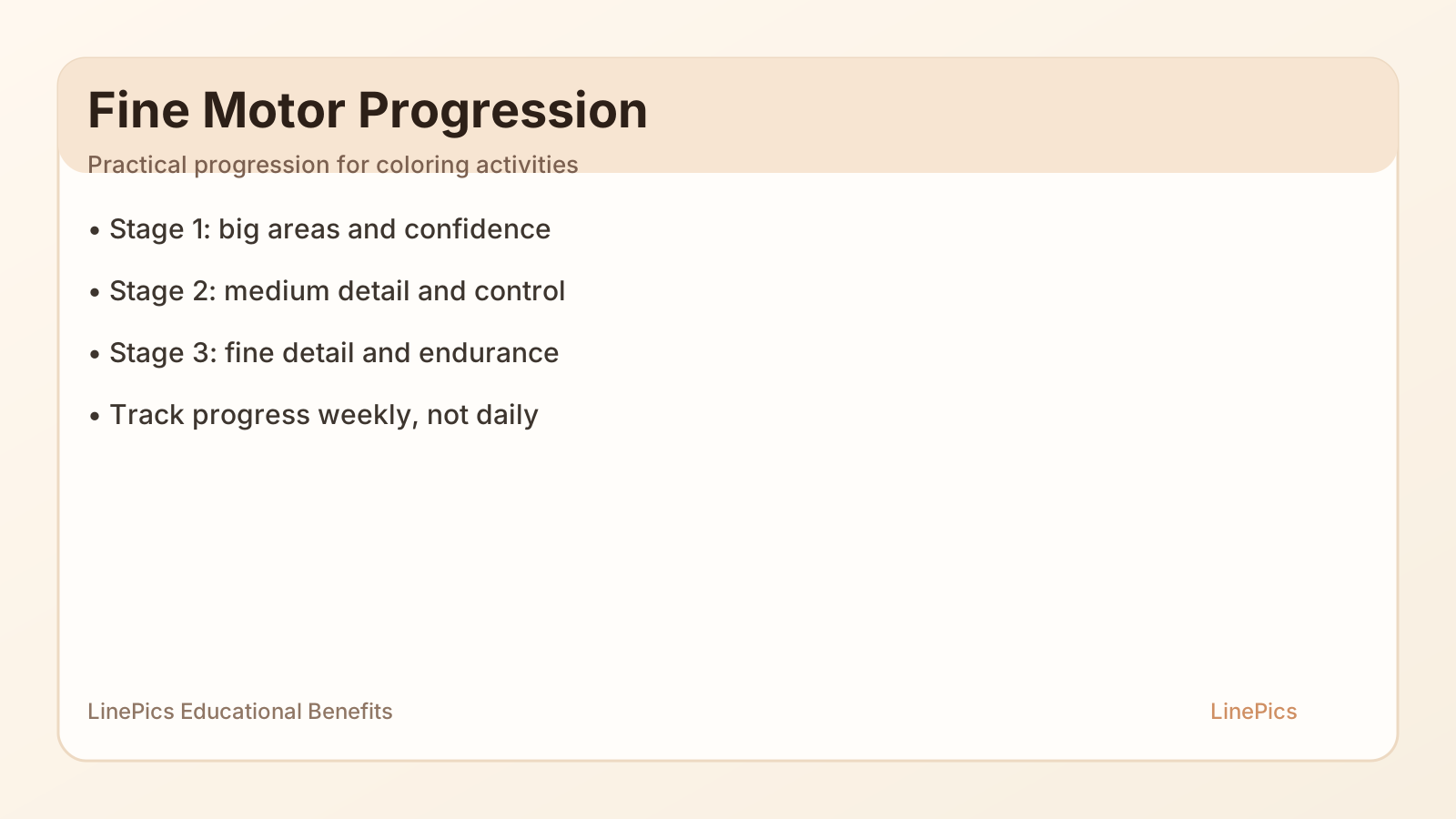
Figure: Practical progression from basic control to fine-detail coloring work.
A lot of websites claim that coloring magically boosts every learning outcome. That is not helpful.
Here is the practical truth: regular work with coloring pages for kids can support fine motor development when activities are matched to age, time, and task quality.
What Fine Motor Skills Mean in Daily Learning
Fine motor skills are small-muscle control tasks used for:
- pencil grip,
- writing stability,
- cutting,
- buttoning,
- controlled hand movement.
Coloring is not the only method, but it is one low-cost method that children tolerate well when pages are designed correctly.
Why Printable Coloring Pages Can Help
Effective printable coloring pages require:
- direction changes around edges,
- pressure control,
- pace control,
- hand-eye coordination.
These are foundational actions for early writing and drawing tasks.
The Conditions That Make Coloring Useful
Coloring supports skill growth when:
- Difficulty matches the child.
- Session length is realistic.
- Adult feedback is specific.
- Activities are repeated over time.
What does not work:
- very hard pages for beginners,
- one long session once a month,
- correction that focuses only on neatness.
A Practical Progression Model
Stage 1: Big Areas
- thick outlines,
- simple shapes,
- short sessions.
Goal: build confidence and movement control.
Stage 2: Medium Detail
- smaller objects,
- more direction changes,
- simple scene structure.
Goal: improve consistency and endurance.
Stage 3: Fine Detail
- narrow spaces,
- layered scenes,
- precision over speed.
Goal: prepare for sustained writing and drawing demands.
What Adults Should Say During Activities
Swap vague praise for specific feedback:
- "You slowed down on the corners."
- "Your grip stayed steady this time."
- "You used short strokes in small spaces."
This trains awareness and keeps motivation high.
Home Routine That Works
For families:
- 3 sessions per week,
- 10 to 20 minutes each based on age,
- one easy page plus one moderate page.
Consistency beats intensity.
Classroom Implementation
Teachers can embed coloring into literacy or science blocks:
- vocabulary labeling,
- sequencing tasks,
- compare-and-describe prompts.
That keeps activities educational while still practicing motor control.
Common Mistakes to Avoid
- Using ultra-complex pages too early.
- Focusing only on "inside the lines" perfection.
- Ignoring paper and tool quality.
- Skipping progression tracking.
A child who enjoys the task will repeat the task. Repetition is where gains come from.
How to Track Progress in 4 Weeks
Simple indicators:
- less hand fatigue,
- smoother stroke control,
- better grip stability,
- improved willingness to complete tasks.
Use notes, not pressure. Progress is often uneven week to week.
For Coloring-Site Operators
If you publish free printable coloring pages, add value by:
- tagging pages by motor difficulty,
- publishing parent guides for progression,
- explaining how to choose materials by age,
- including short skill prompts under each downloadable page.
This is the kind of people-first depth search engines and users both reward.
References
- CDC milestones and development resources: https://www.cdc.gov/ncbddd/actearly/milestones/index.html
- NIH/PubMed index for pediatric fine motor and developmental research: https://pubmed.ncbi.nlm.nih.gov/