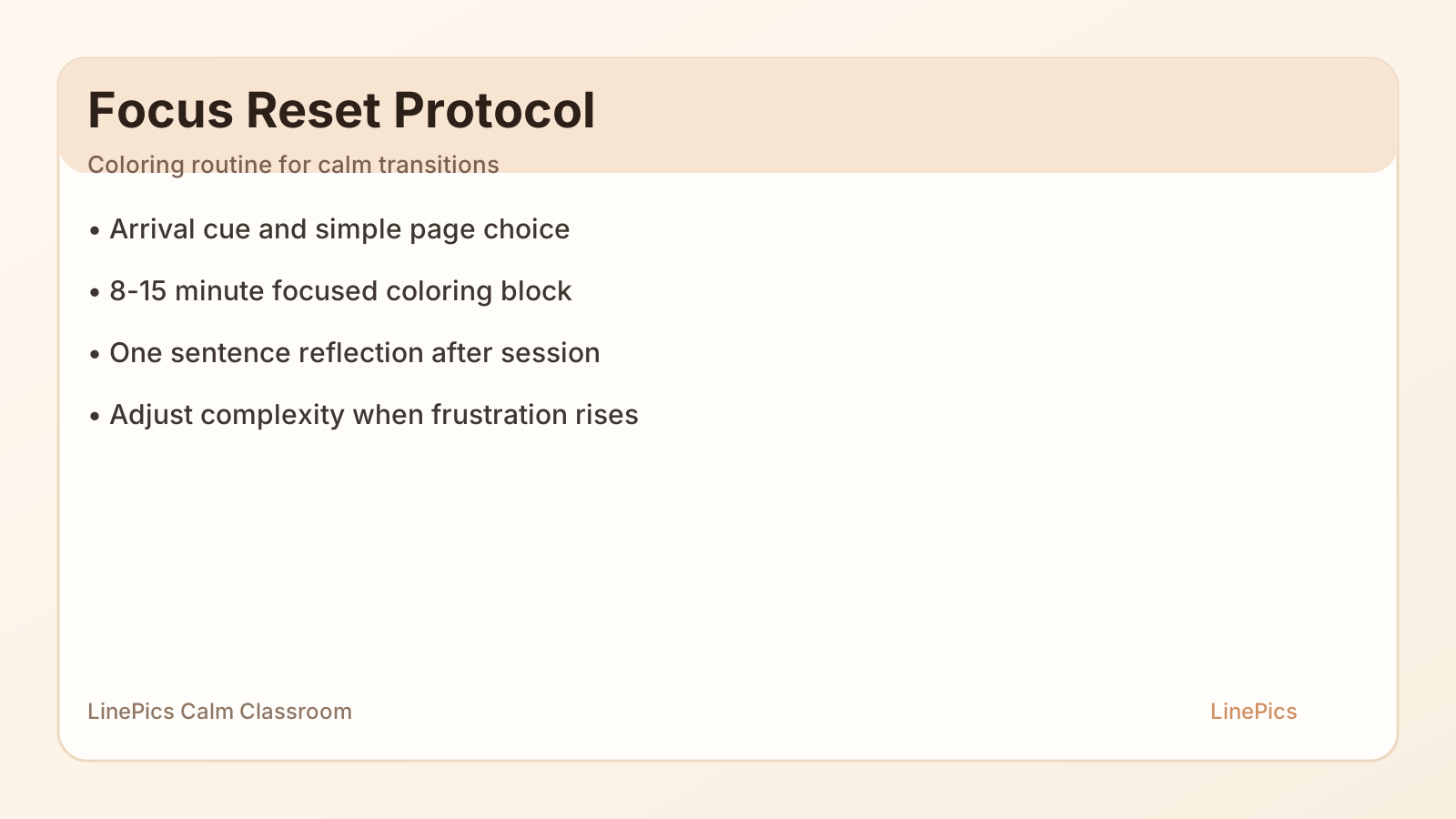
Figure: Three-part focus reset protocol using structured coloring routines.
Parents and teachers often ask whether coloring pages for kids help with focus and emotional control.
Short answer: coloring is not a cure-all, but structured coloring sessions can support calm routines, attention transitions, and self-expression.
What Coloring Does Well
Coloring activities offer:
- clear start and finish,
- predictable motor rhythm,
- low social pressure,
- visible completion.
These traits make coloring useful during transitions, reset periods, and low-stakes reflection time.
Where Claims Go Too Far
Some content claims coloring alone treats anxiety, ADHD, or behavior disorders. That is not responsible.
Use realistic language:
- coloring can support regulation routines,
- coloring can reduce immediate overstimulation for some learners,
- coloring should be one part of a broader support plan.
A 3-Part Regulation Protocol
Use this when children are restless or dysregulated.
- Arrival minute: one breathing cue and one simple page choice.
- Focused block: 8 to 15 minutes of quiet coloring.
- Exit reflection: one sentence on feeling before and after.
This tiny structure turns a passive worksheet into a self-regulation routine.
Choosing the Right Page for Focus Work
If the goal is calm and attention:
- avoid pages with excessive micro-detail,
- choose medium complexity,
- avoid visually chaotic backgrounds,
- provide two options, not twenty.
Too many choices can raise friction.
Classroom Use Cases
Good moments to use printable coloring pages:
- after recess transitions,
- before tests as a calm start,
- during station rotation downtime,
- in counseling corners.
Avoid using coloring as punishment. That breaks trust and weakens outcomes.
Home Use Cases
For families, coloring works well:
- before homework start,
- before bedtime wind-down,
- during weather-related indoor days,
- after emotionally intense events.
Use short sessions and consistent timing.
Conversation Prompts That Build Emotional Vocabulary
After coloring, ask one prompt:
- "Which part felt easiest to stay with?"
- "Which color matched your mood today?"
- "What changed from minute 1 to minute 10?"
This helps children name internal states, which is core to regulation.
Red Flags That Mean You Should Adjust
If a child becomes more frustrated:
- simplify the page,
- shorten session length,
- switch tool type (crayon vs marker),
- reduce performance pressure.
The process should lower friction, not add it.
Site-Owner Opportunity
If you run a coloring library, add a category like:
- "calm focus coloring pages",
- "10-minute regulation activities",
- "classroom reset printables".
Then pair each download with one brief facilitation script. That is real user value.
References
- PubMed index (coloring and mental-state research): https://pubmed.ncbi.nlm.nih.gov/
- CDC child development resources: https://www.cdc.gov/child-development/positive-parenting/index.html